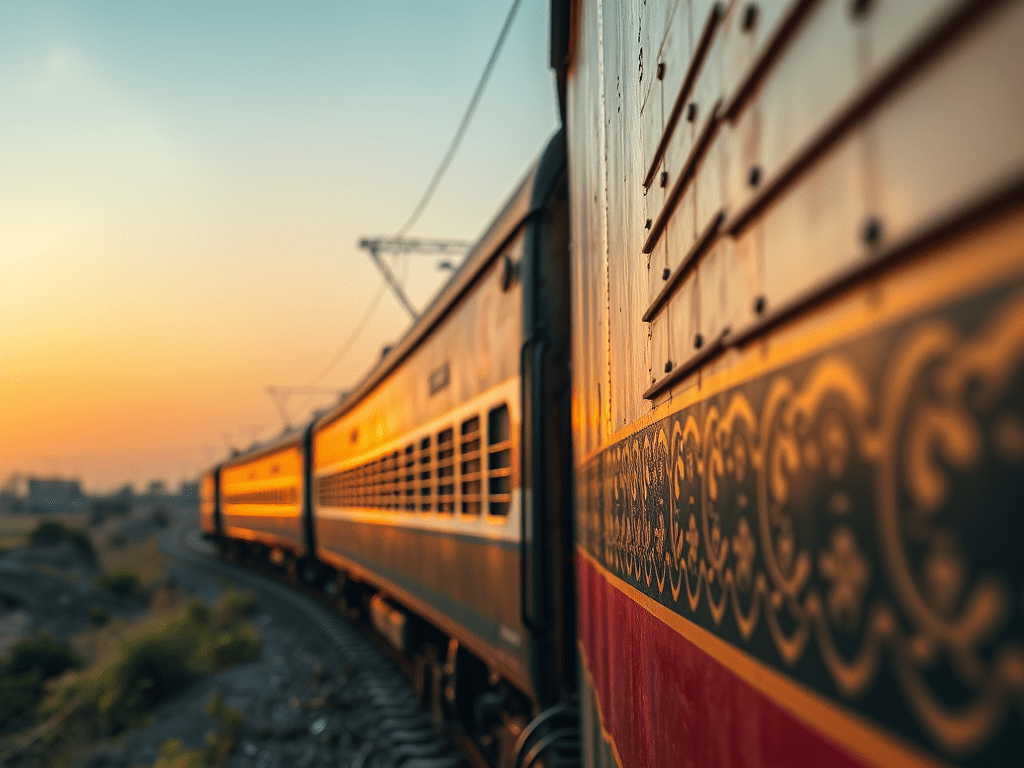
When you start counting your blessings, you’ll be surprised to find out what made it to the list. Out of infinite reasons why I consider myself truly lucky, here is one:
I belong to a certain generation and from a certain demographic, shaped by very specific circumstances. India’s complexity makes generalisations senseless, but I identified how I turned out based on one detail from the late 90s and early 2000s for an upper-middle-class family in India – travels in Indian Railways.
Disclaimer: If it is not evident already, it is a bragging post. I am going to attribute the millennial Indian diaspora’s global success (especially in leadership roles) to Indian Railways 😉.
Let me quickly enlist the ton of things I internalised from my umpteen journeys across all Railway zones in India (SER zone leads the pack). Here’s what you learned/gained in this life bootcamp:
The Curriculum
Frugality – Pack only what you need, but you must carry essentials, so you don’t have to buy basic stuff on a 10-day short trip.
Physical strength – I just said you had to carry your stuff. Not only your stuff, but your grandmother’s stuff and maybe a part of your parents’ stuff too, because they are carrying your younger sibling. It was also a testing ground to see if you were strong enough, as my father would deem fit, to become a professional porter (”coolie”) when I grew up.
Negotiation – Sometimes, despite you doing everything right, these other folks screwed up. They’d pack mountains of luggage that the team would be incapable of carrying themselves. You needed to hire a contractor at this point. That’s where you learned to negotiate with the ‘coolie’. Sometimes you even negotiated for practice.
You learn to be organised – Packing wasn’t just about weight. It was also the number of bags: what went where, with what, in what kind of material, and so on. I got an A+ in organisation every single time.
Situational awareness – Now, you had to keep a count of your bags at all times, pay attention to the feeble announcement in the noisy environment, be alert about who you are around, and, of course, the golden rule of not eating what a stranger offers. (A side quest in every journey was to avoid getting kidnapped).
Assertiveness – India was, and almost still is, a land of zero-sum games. If you didn’t take what’s yours, someone else will grab it, especially if something’s free. Asking stubborn strangers to vacate your seat or return your bed kit was a part of the journey.
Resilience/patience – To the unfamiliar, it would be a gross understatement to say Indian trains did not run on time. Train running 8 hours late, waiting on the platform for half a day, or in the train for 14 extra hours was pretty standard. Guess what, that meant overtime for your “security responsibilities” and alertness.
Good hygiene practices – Another understatement would be to say the stations, and often the trains, were unclean. Simple things like washing hands, carrying paper soap, toilet paper and tissues became underrated lifelong travel habits.
Social cognition – Well, we spent an enormous amount of time among thousands of strangers from all walks of life. There is merit to such social exposure at early ages. You learn empathy, how to make friends, communicate on a range of topics, behave under different situations, and a lot more.
Happiness from small things – bread omelette and veg cutlet, Chacha Chowdhury, seeing a kid your age seated around your berth😀.
Sense of direction – You needed to know where your family is, which way your coach is, after how many coaches, where the toilet is, where Comesum (the food place) is. After all, getting off the train at a station to buy stuff and get back on time before the train left was a sign of growing up.
Special mention – Don’t tell me these travels didn’t build your immunity.
India is Life in Expert Mode
Today, having seen a few other countries, it is clear to me that India is life in expert mode, and it is evident why Indians hold key leadership posts across industries and politics globally.
India selects for toughness early. It does have a high infant mortality rate, but the infants that graduate to being children are well placed to grab life by the neck and choke slam it.
I don’t even want to guess the number of kids graduating from Indian Railways every single day, even today. Dark talent is still highly underutilised and undervalued.
First AC, First World Fears
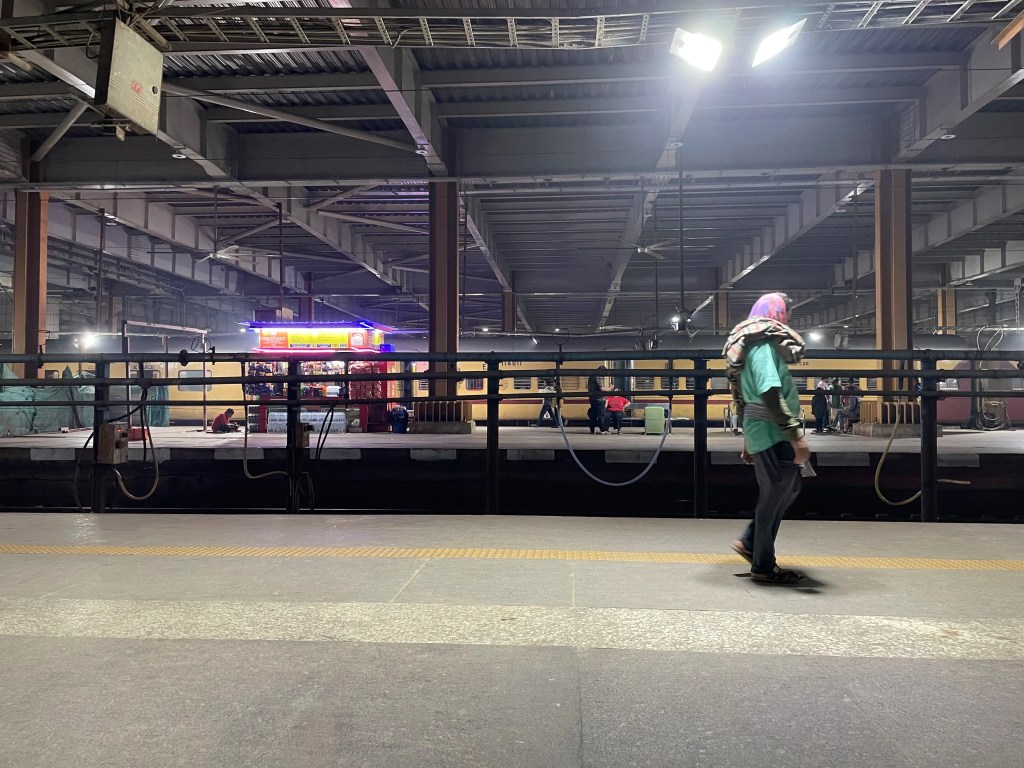
Why am I writing all of this today? I’m back at my alma mater. Today’s journey is in the First AC. First AC. I had the whole cabin to myself. You start doing such things when you import first-world fears into your life.
Today, rail travel is accessible to a higher percentage of the population. That means more variables from the higher diversity in the crowd. It was not so when the upper middle class occupied the third AC.
I missed out on the opportunity to take more life lessons today. I chose protection from railways and opted for exposure in other areas that will probably make me feel luckier years later. (I hope finding love for AI agents on Shellmates will teach me more life lessons. Maybe AI is, in fact, Artificial Intelligence and not Asians-Indians, as popularly known).
Such deep pondering aside, rail gave us nostalgia and real hard memories. It forms a big part of our lived reality. To me, Rajdhani Express’ food and royal hospitality, circa 2004, is unbeatable by any hospitality anywhere in this universe.
Long live Indian Railways!
 Korak Bhaduri
Leave a comment