I visited Vietnam last month. A must-see tourist attraction near Saigon (Ho Chi Minh City) is the Cu Chi tunnels. These man-made underground tunnels were constructed by the Viet Cong to combat the French and later the American forces in the 20th century. I’ve been to many natural and man-made earth structures (caves, tunnels, etc.), known for their historical importance, engineering marvel, or stunning natural formations. However, the best one came today – Kotumsar in Jagdalpur, Chhattisgarh. I’ll explain ‘why’ in a moment.
Today’s visit to Kotumsar brought misfortune to half of our team, who have never been to the Borra caves in the Araku Valley. That’s because, after being here, we decided it’d be wise to skip Araku Valley on our return leg.
My experience with most well-known caves in India and abroad has shown they are often highly commercialized. Approaches to these sites typically feature markets and souvenir shops, and they have well-lit interiors. You’ll find ‘Ramesh’ and ‘Priya’ commemorated on the walls, the selfie crowd dominates, and one must navigate through endless noisy tourists. Not surprisingly, I wasn’t particularly keen on cave visits until today.
Honestly, I wasn’t fond of waterfalls either, but this trip is changing things.

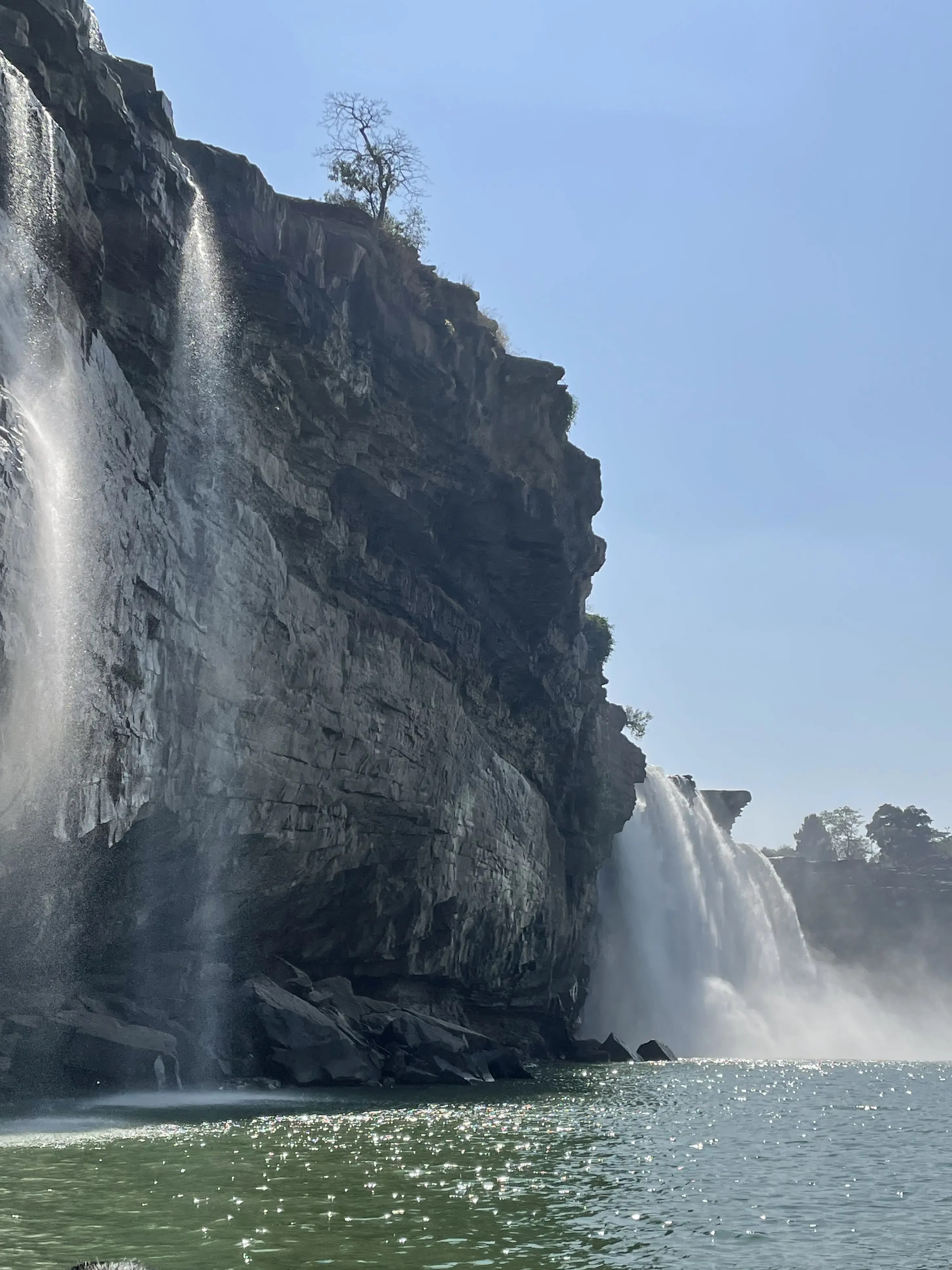
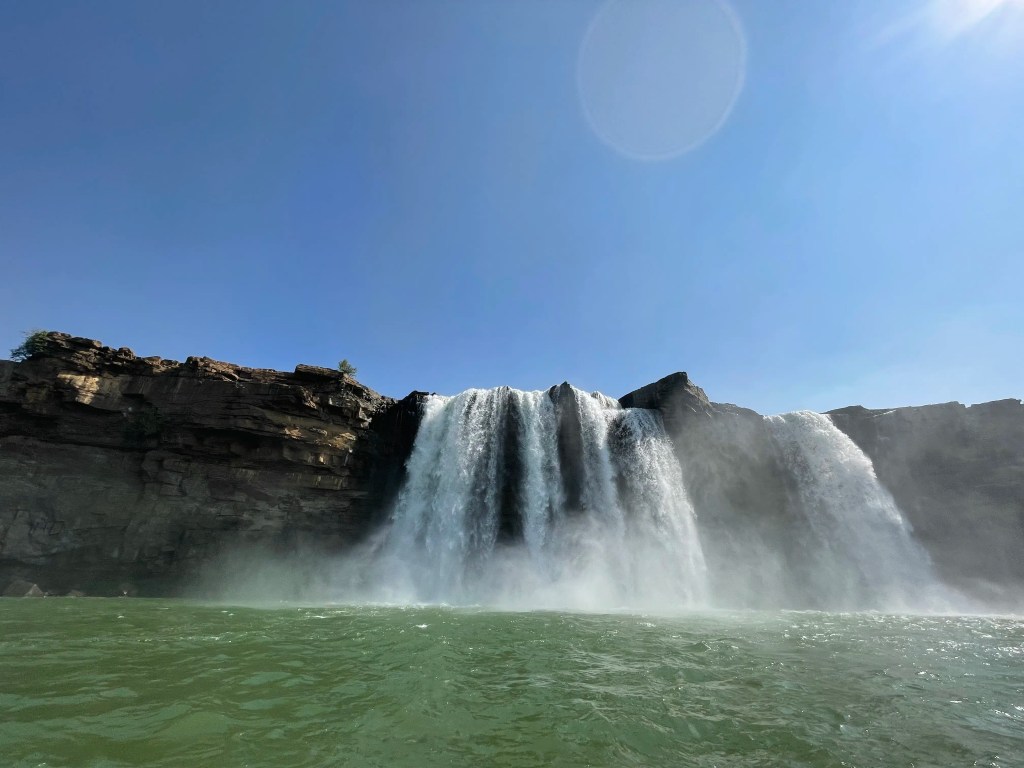
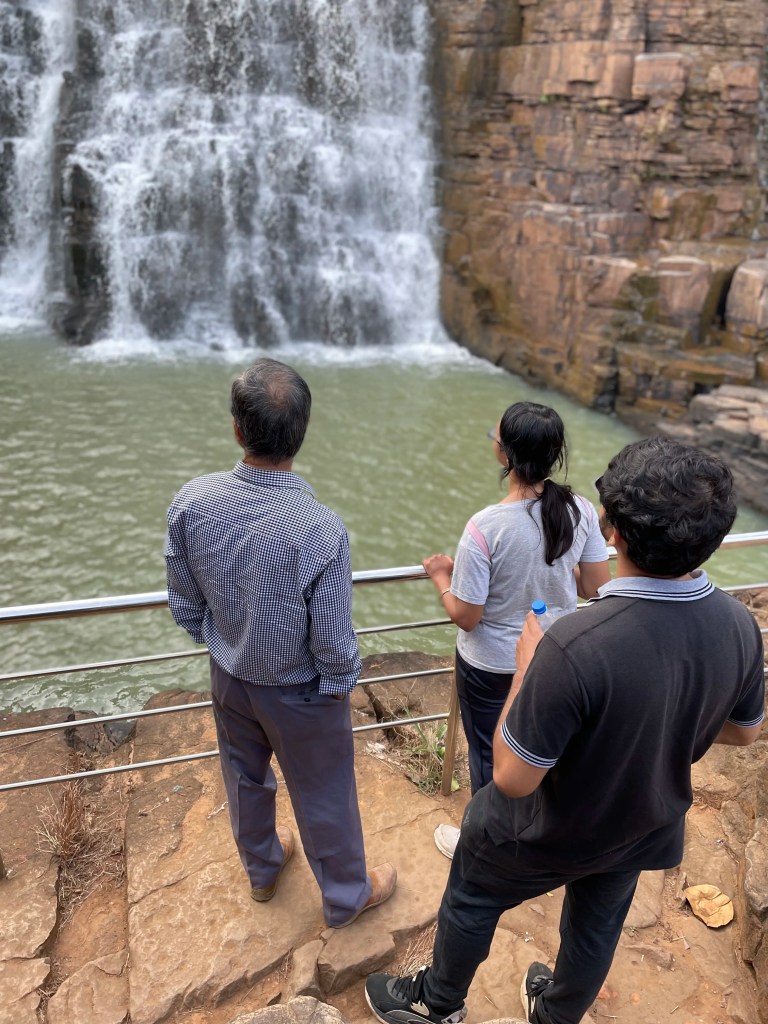
After a breakfast of Dalia and scrambled eggs, we commenced our day trip to Kanger Valley National Park. We’ve traversed endless forest ranges during this trip. To name a few: Simlipal National Park, Harichandanpur-Telkoi Reserve Forest, Tikarpada Wildlife Sanctuary, Satkosia Tiger Reserve, Kalahandi, Karlapat Wildlife Sanctuary, and now Kanger Valley. Our itinerary today included Kotumsar Caves and Tirathgarh Falls.

Kovid drove to the entry point of Kanger Valley. We got off our i20 and boarded a 4×4 Gypsy, which took us to Kotumsar. Here’s why Kotumsar offered my best-ever cave experience, one I doubt I’ll replicate.
- It’s a natural work-in-progress, i.e. dripping water is continually forming stalactite and stalagmite structures.
- Thankfully, it’s yet to attract the tourism attention it deserves.
- It is vast (and still expanding with new excavations) with remarkable formations and stories.
As a result, I felt a few sensations often obscured in tourist-heavy locations. I could feel the lack of oxygen, the lack of sound, and finally, the lack of light. Interestingly, despite the absence of these basic elements, life forms still make these caves their homes (we saw bats, frogs, and blind fish surviving on algae).
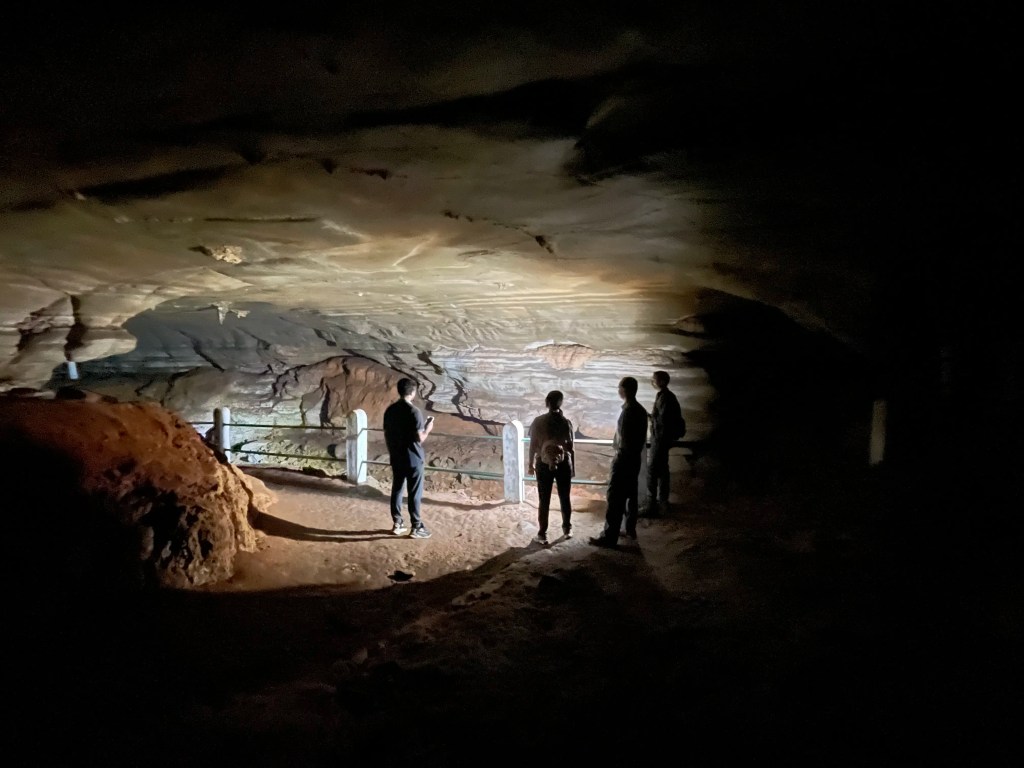


At the cave’s end, our guide Somdar turned off his torchlight and invited us to experience the cave in its natural state. It was darker than closing your eyes. For the first time, I kept hoping my eyes would adjust to the darkness and reveal the surrounding contours, and they didn’t. This total blindness was humbling. It didn’t matter if my eyes were open or closed. The same result, I couldn’t detect any light.
On this trip, I’m continually mesmerized by the unexplored, yet simultaneously distressed by what we are destroying. We’re making disproportionate losses trying to pursue short-sighted gains. I’m excited to discover more hidden treasures, but also concerned that we might eventually ruin them.
Until next time.
This article is part of a four-part blog series. Here’s the complete list:
- ROAD TRIP (PART 1): FROM KOLKATA…
- ROAD TRIP (PART 2): I EXPERIENCED TOTAL BLINDNESS FOR 2 MINUTES
- ROAD TRIP (PART 3): HAMPI: A TALE OF TWO VISITS
- ROAD TRIP (CONCLUSION): HIGHLIGHTS AND ENDURING MEMORIES
Check out the Instagram page of this trip where Kovid shared the daily highlights.


 Korak Bhaduri
Leave a comment