Technology Quotient (TQ): “our ability to assimilate or adapt to technology changes by developing and employing strategies to successfully include technology in our work and life.”
The Harvard Business Review

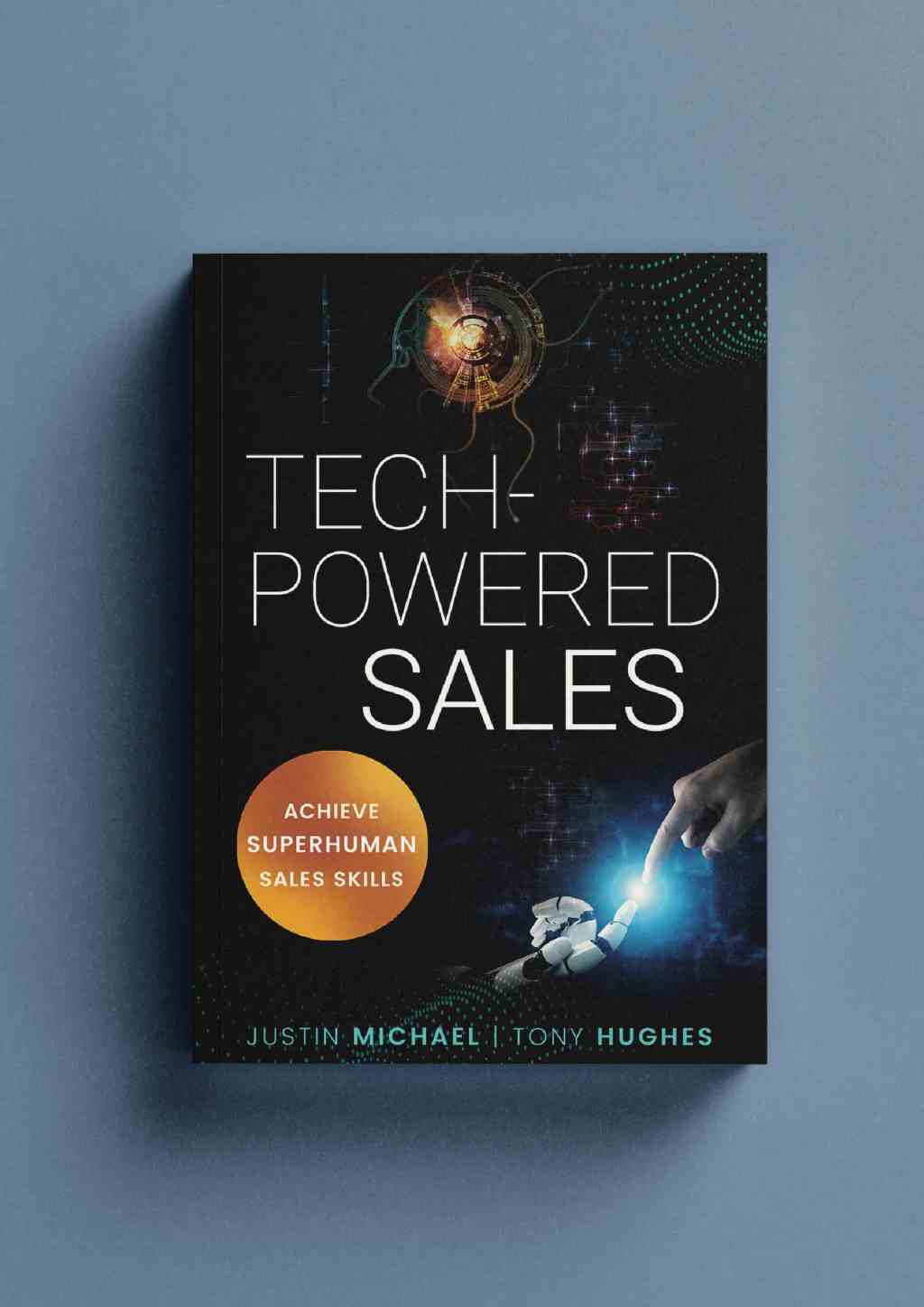
This week, I picked up the book Tech-Powered Sales by Justin Michael and Tony Hughes as part of a tech-knowledge up-gradation exercise. After reading it, I’d have to congratulate myself for the selection. It is a highly researched and technical book coming from the OGs of the field. It provides in-depth insights and hacks of using the latest automotive and predictive sales tools for turning into a “salesborg” fusion of human and machine.
Of course, before revealing them, they post a disclaimer for ethical usage.
“There’s just far too much evil these ideas unleash if your goal is to weaponize the top of the funnel.”
The only rational course of action after reading it was to document the key takeaways for future perusal. So, here it goes!
The Basic Premise of the Book
Low-value tasks need to be automated so that Sales Development Reps (SDRs) have free time for focussing on the actual selling rather than the preparation for selling.
Sales is one of the least efficient professions. Salespeople spend only one-third of their total time in actual selling and fail consistently to close deals. Most of their day-to-day non-revenue generating administrative tasks such as list building, emailing, calendaring, CRM input, and such can be easily automated.
So, the winning formula in sales: Machines highlight the best opportunities by doing the repetitive tasks, and humans convert them with empathy, compassion, and creativity.
In the next two sections, I note the key sales software categories a business needs to deploy in its day-to-day functioning. I plan to use these lists as blueprints for future sales strategizing. The discussions in the book around the tools range anything from making use of trigger events to writing emails that would tackle the Spam filter and pass the Turing test. I intend to use those discussions for supplementary hacks. For comprehensively learning any specific tool, I’d go through the tutorials and courses available online.
The Essential Stack
The authors insist on the bare-minimum investment on the following tools if you are doing business. The entire stack may be expensive (~$1000/rep/month) but absolutely mandatory.
| Category | Leading Vendors |
| CRM/CX/Marketing Automation | Salesforce, Microsoft Dynamics, Hubspot, Zoho |
| Social/Networked Intelligence | LinkedIn Sales Navigator (Navigator or Nav), Twitter, YouTube, Strava |
| Sales Engagement Platforms | Outreach, SalesLoft, RingDNA, Revenue Grid, Outplay, Groove, XANT |
| Data Enrichment | Cognism, ZoomInfo/Discover.org, Adapt.io, SalesIntel.io |
| Trigger Event Monitoring | ZoomInfo “Scoops,” InsideView, Navigator, Triggr.ai, Engagio/DemandBase |
| Parallel Assisted Dialers | ConnectAndSell, ConnectLeader, Orum |
| Dialers | RingDNA, Aircall, Dialpad, Truly, RingCentral |
| Collaboration | Zoom.us, Teams, Google Meet |
The Advanced Stack
The following list covers the optional categories that give you the competitive edge. The choices from these categories would be unique to a business. The category-leading vendors may change very quickly and there would be differences in the offerings within the same category. The entrepreneur is advised to do their own research and use their judgement before subscribing to these categories.
| Category | Leading Vendors |
| Intent data | Bombora, TechTarget, Slintel, 6sense, Leadfeeder |
| Firmographics, psychographics, and technographics | Orb Intelligence (D&B), HG Insights, Triggr.ai |
| Rep persona and brand management | Buffer, LinkedIn, Hootsuite, SocialBee, Lately.ai |
| Front site chatbot | Drift, Conversica |
| Prospect enrichment and ML-driven personalization suggestions | Nova.ai, Autobound.ai. |
| Research curation | CheetahIQ, GR8 Insight |
| Communication and DM videos | Drift, Vidyard, Bombbomb, LinkedIn |
| Calendering | X.ai, Calendly, Chili Piper, Kronologic |
| Better conversations and on-brand messaging | Grammarly, Lavender |
| Email management 2.0 | Superhuman, Hey (Basecamp), Front |
| Smart teleprompter and conversation intelligence | Gong.io, Chorus.ai, ExecVision, RingDNA, Jiminny, Wingman, Fireflies.ai. |
| Real-time call and voice guidance | Balto, VoiceVibes, Quantified Communications, Verbal Transactions, Beyond Verbal |
| Presentation and demo Performance | mmhmm, LivePreso, Open Broadcaster Software (OBS) |
| Content automation | Descript, Remastermedia, SocialBee |
| Reply management / sentiment analysis | LeadGnome, Outreach.io |
| Affiliate referral automation | CoSell.io |
| Account mapping and planning | Lucidchart, Airtable, Trello |
| Forecasting | Clari, Ebsta, Boostup.ai, InsightSquared, AtriumHQ, Einstein within Salesforce |
| Deal management | Dealpoint.io, Dooly, Slack/Troops deal rooms, P6 Risk, Slack/Einstein within Salesforce |
| Proposal contract management | Docusign, Adobe eSign, CPQ |
| Win/Loss insights | Trinity Perspectives |
| Live crowdsource intelligence | Guru, Tribyl |

Concluding Remarks
The book ends with a glimpse into the future (rather present!). With the kind of AI advancement discussed in this section, your own future Jarvis (DVSA – digital virtual sales assistant) is likely to ensure that you become a sales god! The role of SDRs will more likely change into that of a sales analyst or sales engineer. Sales strategies will be multi-channel. Multiple independent systems would converge into holistic stack offerings.
The book is a must-read for anyone willing to add to their personal repertoire of sales strategies. I’d recommend a decent familiarity with sales, marketing, and SaaS-related jargon for a smooth read. Use the book as a handbook in your sales journey. Happy reading!
P.S., For beginners, I’ve created a demo video on how some of the above-mentioned tools can be used for prospecting leads and creating rudimentary workflow automations. The Agoge sequence by Sam Nelson from Outreach is the model I’ve used for my sales strategy. The strategy is mentioned in the book’s sixth chapter. Check out the video below!
 Korak Bhaduri
Leave a comment